Keeping in Touch:
The Stories Behind the Cards
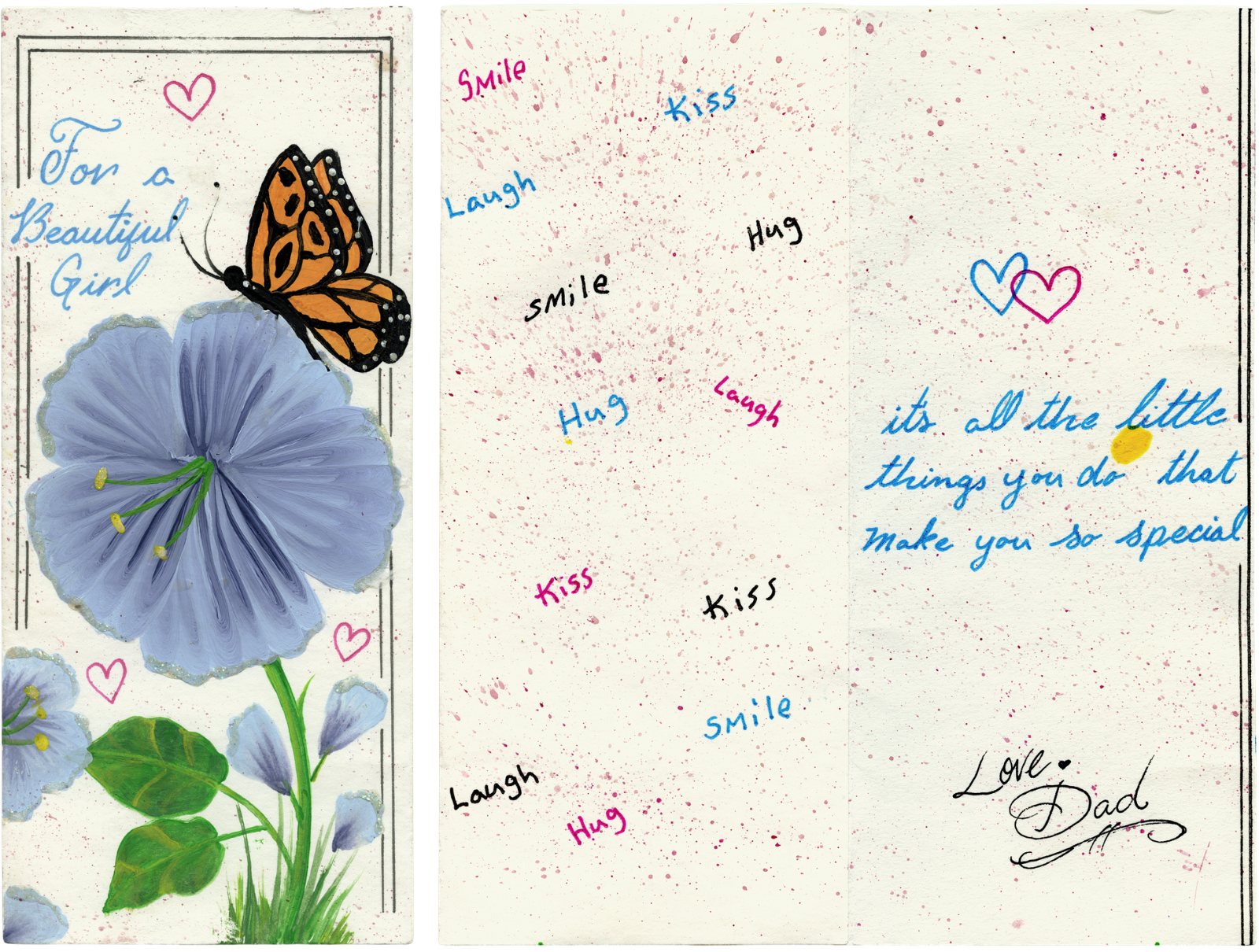
Postmarked from the Inside is an exhibition curated by Vitalis Im, Martín Vargas, and Brianne Sheltraw. Our associate curators include Emily Chase and Suzy Moffat.
This exhibition invites visitors to look closely at an object that most of us usually overlook: the greeting card. In everyday life, greeting cards are often considered simple, sentimental items, something quickly purchased, signed, and sent. Yet within the context of incarceration, these small objects take on an extraordinary significance. They become vessels for love, memory, longing, apology, and presence in situations where physical closeness is impossible.
In prisons, contact between incarcerated people and their loved ones is tightly controlled. Visits are limited, phone calls are brief and costly, and letters are often monitored or delayed. Under these conditions, greeting cards emerge as one of the few material ways people can communicate care and connection across prison walls. A birthday, a holiday, or a moment of encouragement may be condensed into a small folded piece of paper. Within it, a parent tries to remain a parent, a child tries to remain a child, and families attempt to sustain relationships despite separation.
The cards in this exhibition reflect these deeply human efforts. All of them are handmade, carefully decorated, and illustrated by incarcerated artists. Others are complemented with handwritten notes, poems, or drawings, sometimes by the artists, sometimes by the senders. Many carry the marks of improvisation, objects assembled from limited materials and creativity exercised under constraint. In prison economies where artistic labor is often undervalued and prison wages are extremely low, creating greeting cards can also provide one of the few opportunities for incarcerated artists to earn small amounts of money or develop artistic skills.
Yet these cards do more than demonstrate creativity. They also reveal how incarceration reshapes family life. For people separated by prison walls, everyday experiences of connection are fragmented into brief phone calls, letters, and small tokens exchanged through the mail. Major life events, including birthdays, graduations, and expressions of love, are compressed into brief messages and small artifacts. In this sense, greeting cards often carry a heavy emotional weight. They are cherished signs of affection, but they can also serve as reminders of absence and distance.
This exhibition asks viewers to consider greeting cards not simply as objects of sentimentality, but as traces of relationships sustained under extraordinary conditions. Each card embodies a network of intentions: the person who made it, the loved one who received it, and the institutional rules that shaped how it could be created and sent. Together, these elements reveal how prisons do more than confine bodies. They reorganize the ways people relate to one another across time and distance.
At the same time, the cards demonstrate the persistence of human connection. Through small acts of creativity and care, people continue to express affection, humor, and hope despite the limitations imposed upon them. A poem tucked inside a card, a pressed flower, or a playful drawing becomes a gesture that insists on the possibility of relationship even when the system that surrounds it produces separation.
To encounter these greeting cards, then, is to encounter stories of connection maintained against the odds. The exhibition invites visitors to slow down and recognize the emotional labor, imagination, and resilience contained within these modest objects. In doing so, it asks us to reconsider what greeting cards and the relationships they carry can reveal about love, distance, and the enduring human need to remain connected.